

A website for GS Gomma, a rubber parts manufacturer
About the project
GS Gomma is a company in Ceretta di San Maurizio Canavese, near Turin, making elastomer parts for industry. It does rubber injection and compression moulding, and keeps nitrogen deflashing in house — one of the few firms in Piedmont in that position, they say. Their audience is not the shelf buyer but the engineer or the buyer looking for a supplier and wanting to understand quickly which processes are on site.
The website
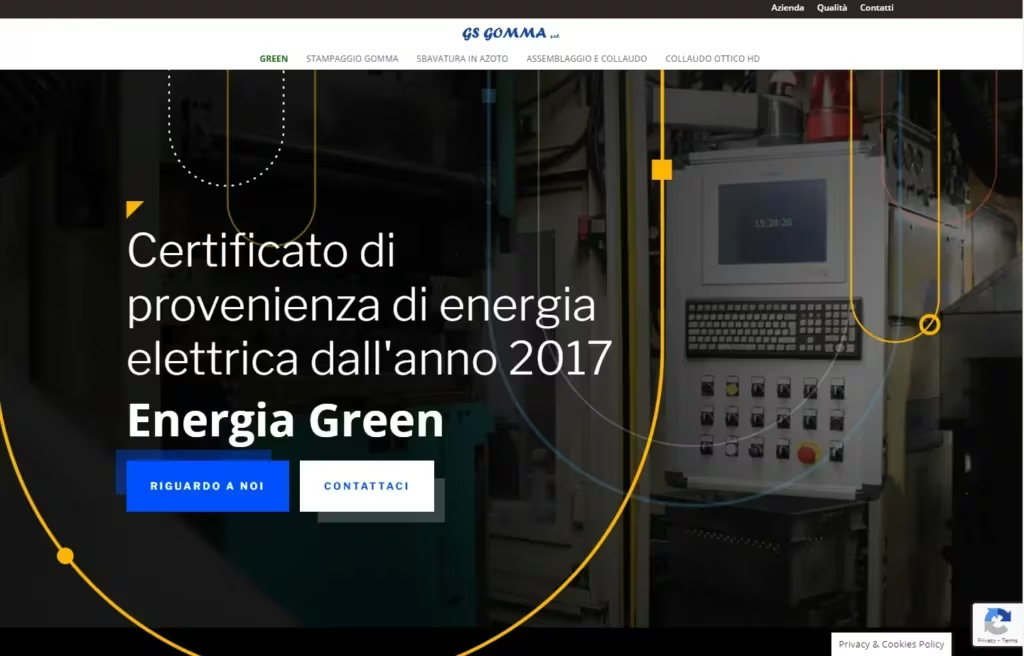
We made a compact site, in Italian, with everything that counts a scroll away: who they are, what they do, how working with them goes. The menu sits on two rows: above, discreetly, the company, quality and contact; below, the main row, with the processes and the Green section. That way whoever arrives sees straight away what happens on the shop floor, not the company org chart. The opening text states the specialism directly, with no brand-book detours.
The production processes
Every capability has its own block on the page: rubber injection, nitrogen deflashing, assembly and inspection, plus the HD optical inspection they invested in to check parts more finely. We put them in the order the part moves through the shop, so it reads as a flow rather than a list of services. Each block stays short and in technical language, exactly as somebody in the field looks for it.
Quality and the energy side
The ISO 9001 certification, issued by TÜV InterCert, has its own page, with an explanation of what it means in practice for a client assessing suppliers. Separately we built the Green section, around the solar installation fitted on the roof of the existing hall: why it was done, what it means for the energy consumption of the moulding processes and how it ties in with the ESG criteria more and more industrial clients use when choosing partners. It is a deliberately long section — it answers a question that ends up in the qualification questionnaires anyway.
Contact
The contact form is simple, with explicit consent for personal data, as European regulation requires. Under it sit the address of the plant, the direct phone number and the email address, plus the company's tax details, for anyone opening a commercial conversation.
How it looks on a phone
More than 9 in 10 people open a website on their phone, so that is where it is decided. These screens come from the site as it runs today.
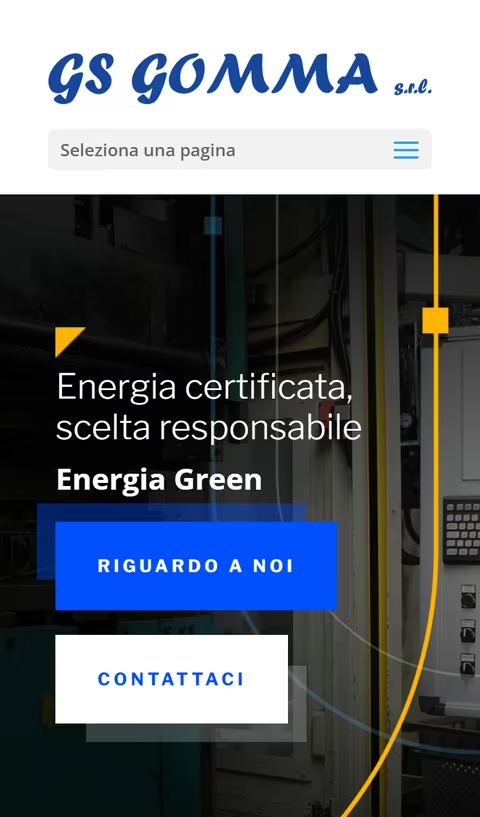
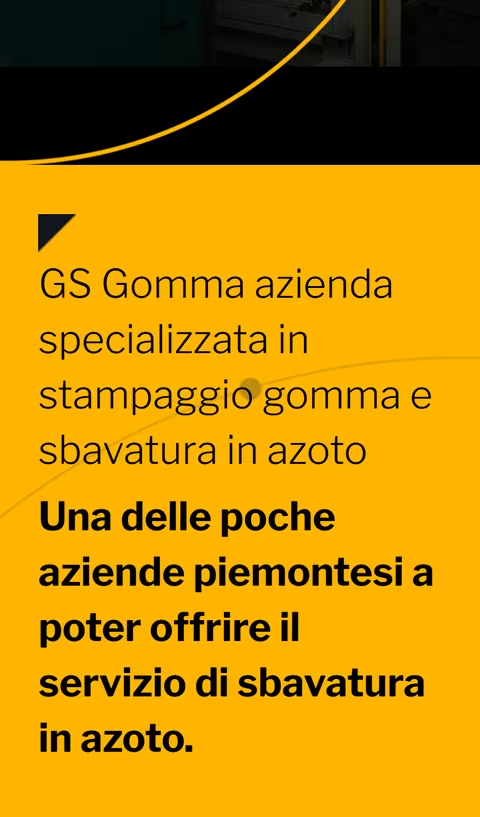
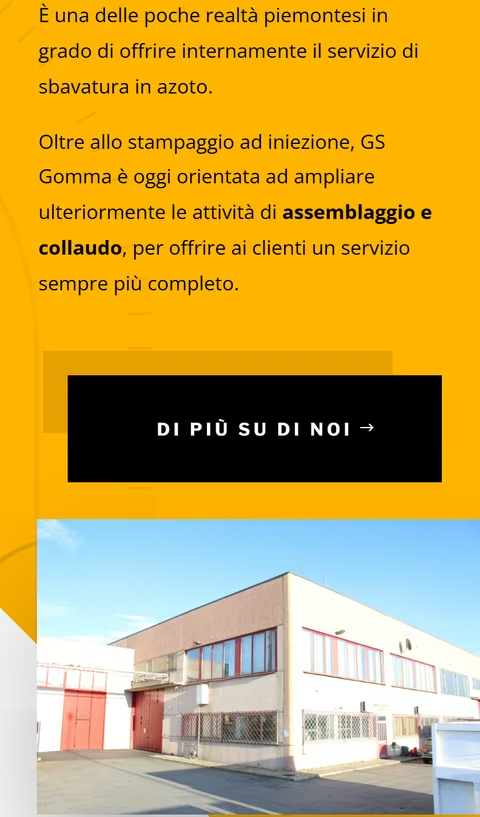
A small site, exactly as small as it should be: the processes explained in production order, a quality page, an energy page and a form. A buyer can form a view of the company before making the first call.
Want something similar?
Tell us what you need and we send you a quote with what goes into the work and what it costs, before we start.